skin school8 min read
Repairing a compromised barrier in four weeks
Over-exfoliation is common, uncomfortable and reversible. Here is the protocol we would give a client, and the signs that mean you should stop.
Written by Aoife Brennan, Formulator
A compromised barrier presents in a recognisable way: skin that stings when water hits it, feels tight immediately after cleansing, looks dull regardless of how much hydration you add, and appears shinier in some places and flakier in others within the same routine.
This is not a skin type. It is a temporary state, and it is one of the few conditions in skincare that reliably responds to discipline rather than purchase.
Weeks one and two: remove
Stop every active. Not reduce — stop. No retinoids, no acids, no vitamin C, no exfoliation of any kind. What remains is a cleanser, a lipid-rich moisturiser, and SPF.
- Gentle, pH-matched cleanser, once a day if you can manage it.
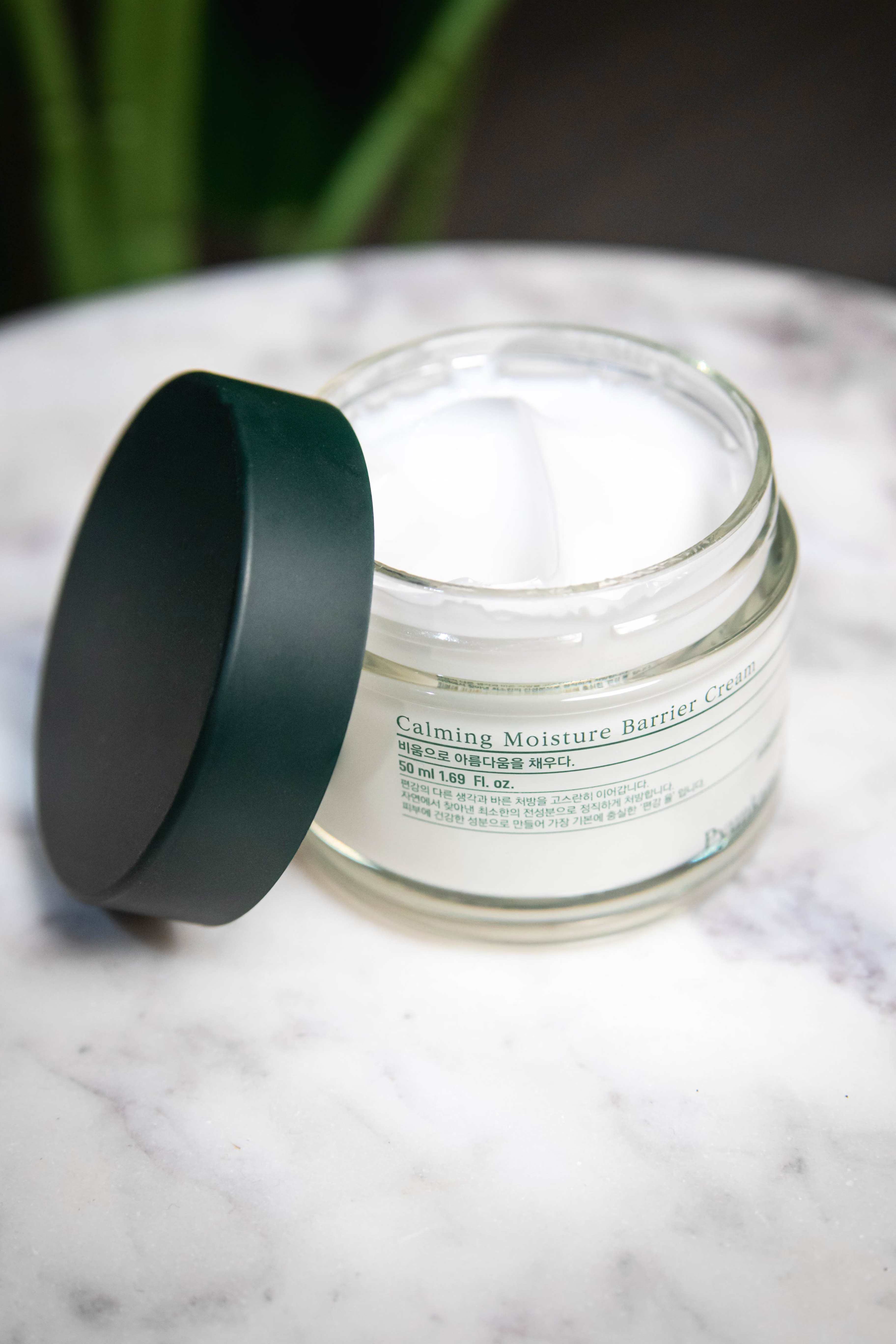
- A ceramide and cholesterol cream, twice a day.
- SPF every morning. Skipping this slows recovery more than any active you have removed.
- Nothing else. No serums, no masks, no new products to test.
Weeks three and four: rebuild
If stinging has stopped and tightness is markedly reduced, reintroduce one thing. Niacinamide first, because it is the active least likely to cause a further setback. Twice a week for a week, then more often.
Hold retinoids back until week six at the earliest, and go back to the slow build-up schedule rather than starting where you left off.
How to know it has recovered
Cleanse and wait. The moment skin stops feeling tight within seconds of rinsing — not after moisturising, but before it — the barrier is functionally intact. That is the test, and it takes ten seconds.
The moment skin stops feeling tight seconds after rinsing, the barrier is intact.